Camera installation Stockholm is a topic that more and more homeowners in Nacka are taking seriously. Over recent years, burglaries in residential areas around Nacka Strand, Älta and Boo have increased during the winter months, and many families are now choosing to invest in a modern surveillance system alongside alarms and secure locks. A well-planned camera installation is not simply a matter of screwing a few devices to a wall — it demands correct positioning, sufficient image quality, a stable network connection and a reliable solution for storing recorded footage. In this article we guide you as a homeowner in Nacka and across the wider Stockholm region through the entire process: from choosing a camera system and planning your network to realistic price ranges and common pitfalls to avoid. Whether your home is a 1930s brick villa with thick walls or a newly built terraced house, there is a solution tailored to your property.
1. Which camera system is the best fit for a Nacka villa?
The choice of camera system depends on three factors: the size of your property, your existing network infrastructure and your budget. For an average villa in Nacka — typically 150 to 250 square metres with garden on three sides — we generally recommend an IP-based system with four to eight cameras. IP cameras communicate over your local network and deliver significantly better image quality than older analogue systems. Popular brands such as Axis, Hikvision, Reolink and Ubiquiti UniFi Protect all offer reliable options across different price segments.
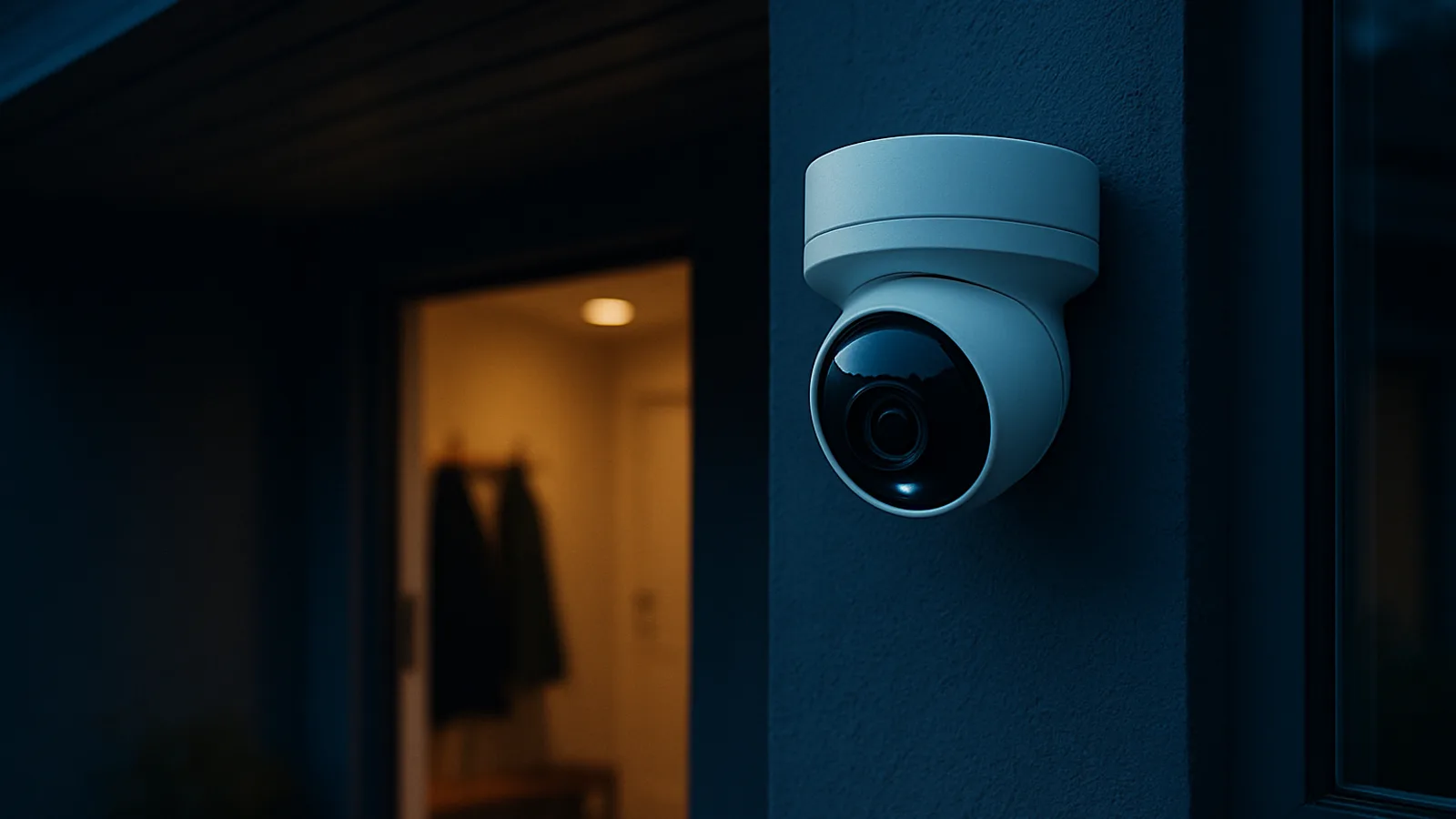
For outdoor positions you should choose cameras rated at least IP66 against dust and water, with built-in IR illumination for night vision and a resolution of at least 4 megapixels so you can identify faces and licence plates. Indoors — for example in a garage or basement — a simpler 2-megapixel model is often sufficient. An experienced IT-tekniker Stockholm with a background in security systems can carry out a site survey and prepare a proposal tailored specifically to your villa.
A complete installation with four outdoor cameras, an NVR unit (Network Video Recorder) and cable routing typically costs between 15,000 and 35,000 SEK including labour. If you choose a wireless WiFi-based system such as Reolink Argus or Google Nest Cam, the entry cost is lower — roughly 3,000 to 10,000 SEK for four cameras — but you become more dependent on solid WiFi coverage throughout the entire property, something we return to in the next section. You can find out more about how Sovin IT approaches kamerainstallation i Stockholm and the packages we offer.
2. Network planning and WiFi help at home before the installation
One of the most common reasons why camera systems stop working — or never work reliably — is poor network infrastructure. Nätverksproblem such as a weak WiFi signal, an overloaded router or a misconfigured VLAN cause cameras to drop their connection, miss recordings or deliver choppy video playback. This is a problem we see regularly at villas in Nacka and other parts of Stockholm.
For a wired IP camera system you need Cat6 cable running from each camera position back to a central switch and NVR. In a villa this can mean 20 to 60 metres of cable per camera, and routing cables through walls, ceilings and basements is usually the most time-consuming part of the installation. Cable routing typically costs 500 to 1,500 SEK per camera position depending on the building's construction.
If you prefer a wireless system, WiFi hjälp hemma is a natural part of the preparation. We recommend upgrading to a mesh network — for example from Eero, Asus ZenWiFi or Ubiquiti — that covers the entire property, including garage and outbuildings. A mesh solution for a villa costs 3,000 to 8,000 SEK including installation. Remember that cameras should be placed on a separate network (guest VLAN) to minimise the security risk if a device is ever compromised. The Swedish consumer authority Konsumentverket also provides useful guidance on what to consider when purchasing home security products in Sweden.
Through fjärrsupport, our technician can log into your network and check signal strength, channel load and firewall settings without visiting the property — a cost-effective way to troubleshoot and optimise before the installation takes place.
3. Storage, remote access and IT security for home surveillance
Once the cameras are mounted and connected, the next question arises: where is the footage stored and how do you access it remotely? There are essentially three storage options: local NVR or DVR storage, cloud storage provided by the camera manufacturer, or a combination of both.
Local storage via an NVR with one or more hard drives gives you full control over your footage and no ongoing subscription costs. An NVR with two terabytes of storage is sufficient for four cameras for approximately 14 to 30 days depending on recording settings. The cost of an NVR unit including hard drive is typically 3,000 to 8,000 SEK. Cloud storage — for example via Hikvision Hik-Connect or Google Nest Aware — is easier to access wherever you are but involves monthly fees of 50 to 300 SEK and requires you to trust the provider to handle your data securely.
Remote access to cameras via a mobile app is now standard on all modern IP camera systems. You can view live footage and play back recordings directly from your phone, whether you are at home in Nacka or on holiday abroad. For this to work without security risks the system should be configured with a VPN or a secure P2P tunnel — never with open ports exposed directly to the internet.
IT security is an aspect many homeowners underestimate. Factory-default passwords, outdated firmware and misconfigured network settings turn surveillance systems into potential entry points for unauthorised users. As part of our IT-säkerhet service, we always review camera firmware, replace default passwords and verify that network segmentation is correctly configured. You can also consult Google Support for specific guidance on how to best configure Google Nest products within a home network.
Get more IT tips straight to your inbox
4. Common problems and how to avoid them
Having completed camera installations for a large number of villa owners in Nacka and in Kista, we have seen a set of recurring mistakes that are straightforward to avoid with the right planning.
The first and most common error is mounting cameras without considering lighting conditions. A camera pointing towards a strong light source — a street lamp or the morning sun rising in the east — produces washed-out, unusable images. The solution is to choose cameras with Wide Dynamic Range (WDR) and to plan the mounting angle carefully during a site visit.
The second common issue is substandard cable routing. Incorrectly routed or undocumented cables cause intermittent faults that are difficult to trace after the fact. We always document cable routes and label every cable and port on the switch — a small step that saves a great deal of time during any future troubleshooting or system expansion.
The third problem concerns power supply. PoE switches (Power over Ethernet) simplify installation enormously because they deliver both power and data over a single cable. Always choose a PoE switch with an adequate watt budget — at least 15 watts per port for outdoor cameras with heating elements. An undersized switch produces unstable cameras, particularly during cold winter months.
Finally, do not forget to check local regulations. Rules on where cameras may and may not be aimed — for example, they should not be directed at a neighbour's property or a public space without good reason — are partly governed by the General Data Protection Regulation (GDPR). An experienced datorhjälp Stockholm partner or IT-support Stockholm professional can help you navigate the regulatory landscape so that your installation is both secure and lawful. With the right planning, the right equipment and a professional installation, you will have a surveillance system that genuinely works when it matters — and that is the only thing that counts.
Need IT help in Stockholm? Book Sovin IT from 499 SEK.
Frequently asked questions
How much does a camera installation for a house in Nacka cost?
A complete installation with four outdoor IP cameras, an NVR and cable routing typically costs between 15,000 and 35,000 SEK including labour. If you opt for a wireless WiFi-based system the entry cost is lower, around 3,000 to 10,000 SEK for four cameras, but you need to ensure solid WiFi coverage across the entire property. The price varies depending on camera model, the building's construction and any network upgrade required.
How many cameras does an average villa in Nacka need?
For a villa of 150 to 250 square metres with a garden we typically recommend four to eight cameras. Common placement points include the front entrance, back door, garage and any blind spots around the building. An experienced IT-tekniker Stockholm can carry out a site survey and tailor the number of cameras to your property's specific layout and risk areas.
Am I allowed to point my surveillance cameras at the street or a neighbour's garden?
The General Data Protection Regulation (GDPR) restricts what you may film. As a general rule, cameras should cover your own property and should not unnecessarily capture a neighbour's land or a public area. If cameras cover an area with significant foot traffic, notification to the Swedish Authority for Privacy Protection (IMY) may apply. A professional IT partner can help you plan camera positions that are both effective and legally compliant.